
Why compatibility matters
Historic walls manage moisture differently
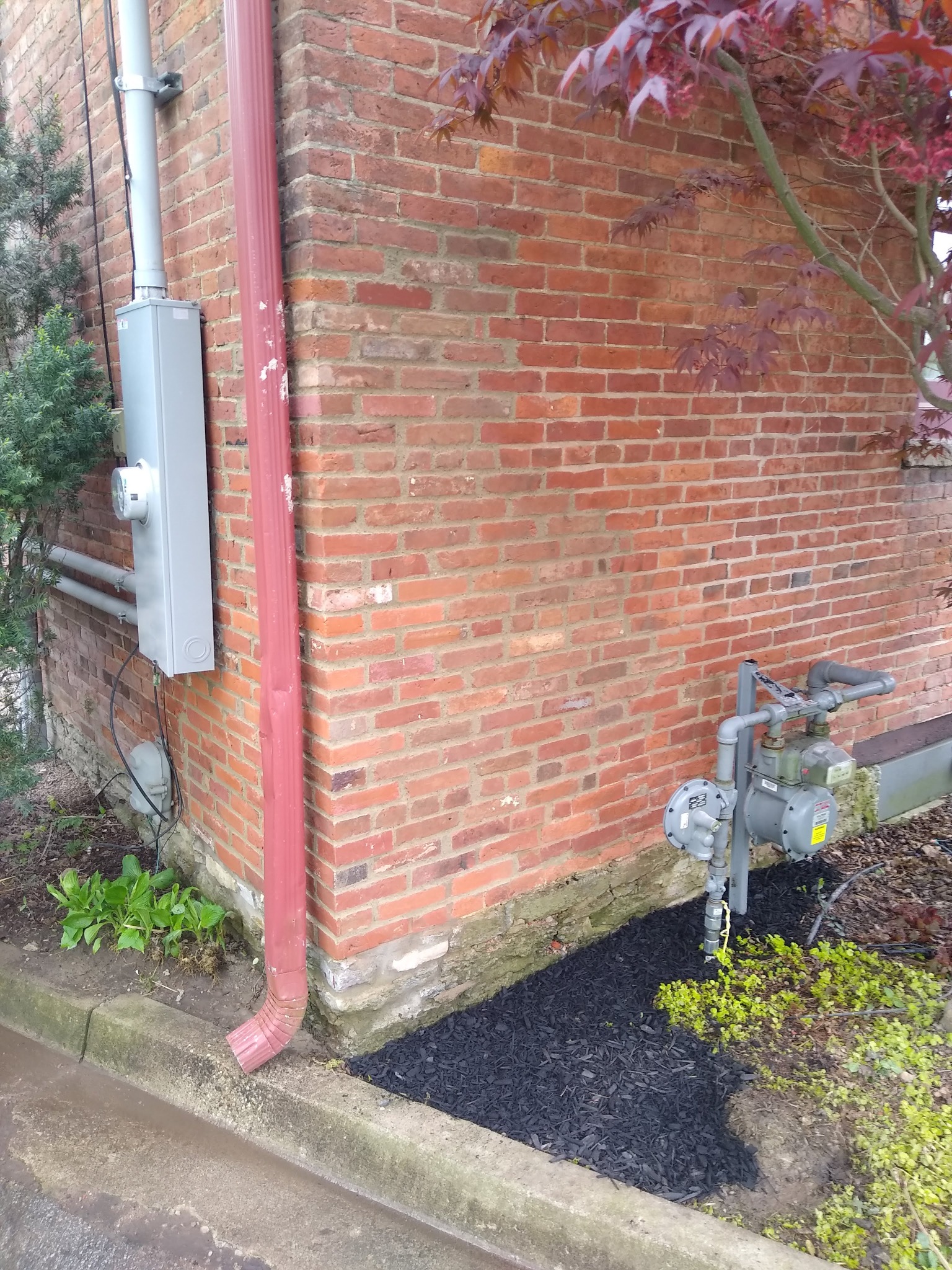
Many older masonry buildings rely on relatively soft, vapor-permeable brick and lime-rich mortar. The mortar joint is intended to accommodate small movements and weathering while allowing moisture to migrate outward.
When replacement mortar is substantially harder or less permeable than the surrounding masonry, stress and retained moisture can be redirected into the brick or stone. Over time, that mismatch can contribute to cracked units, spalled faces and accelerated freeze-thaw deterioration.
The goal is not to select mortar by age alone. Existing units, exposure, wall construction, joint profile and project requirements all influence the appropriate repair material.
Mortar selection
Replacement mortar should be evaluated for compressive strength, vapor permeability, water retention, bond, color, aggregate and joint tooling. Historic work may call for lime-rich mortar, but the proper formulation depends on the existing masonry and exposure.
Brick compatibility
Replacement brick should complement the existing units in dimensions, texture, color and physical behavior. A visual match alone is not enough if the new unit absorbs and releases moisture very differently from the surrounding wall.
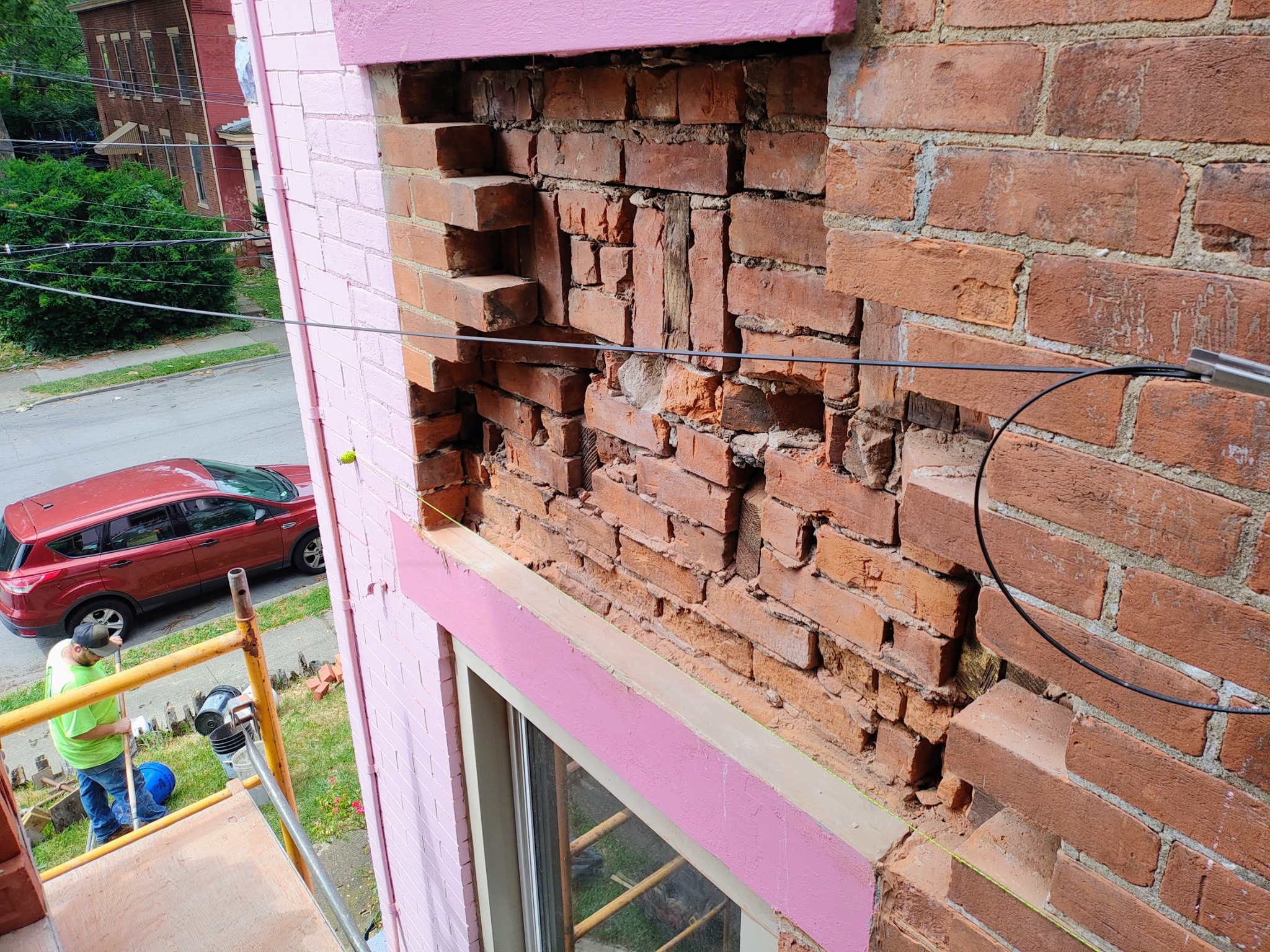
Selective reconstruction
Remove what has failed. Preserve what remains sound.
Preservation qualifications
Certified in Historic Masonry
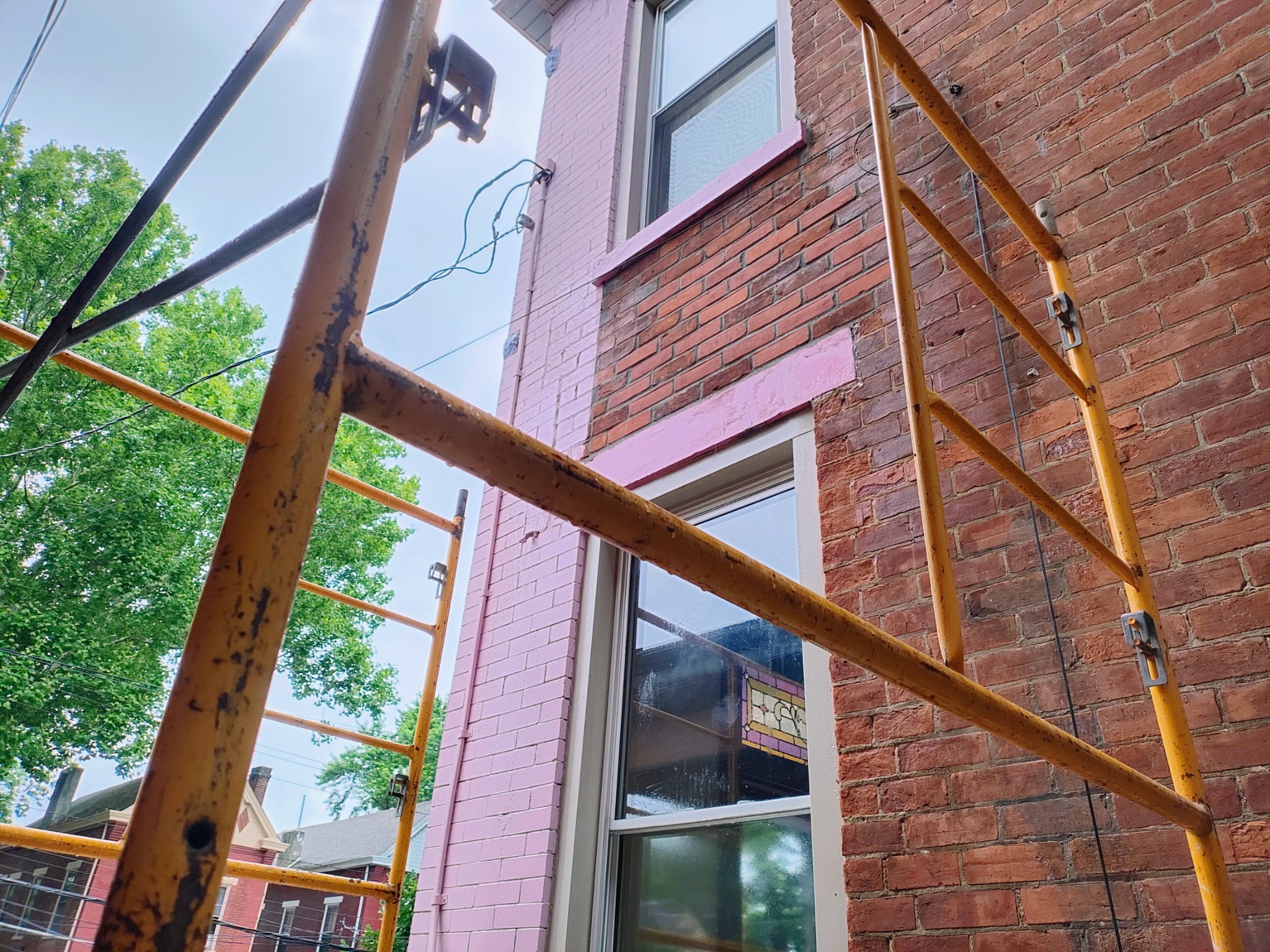
Our team is certified in Historic Masonry Preservation, with hands-on experience restoring historic brick and stone buildings.
Training included historic brick repair, traditional mortars, stone and terra-cotta restoration, condition assessment, mechanical anchoring systems, cleaning methods and preservation guidelines.